Mabritec Central
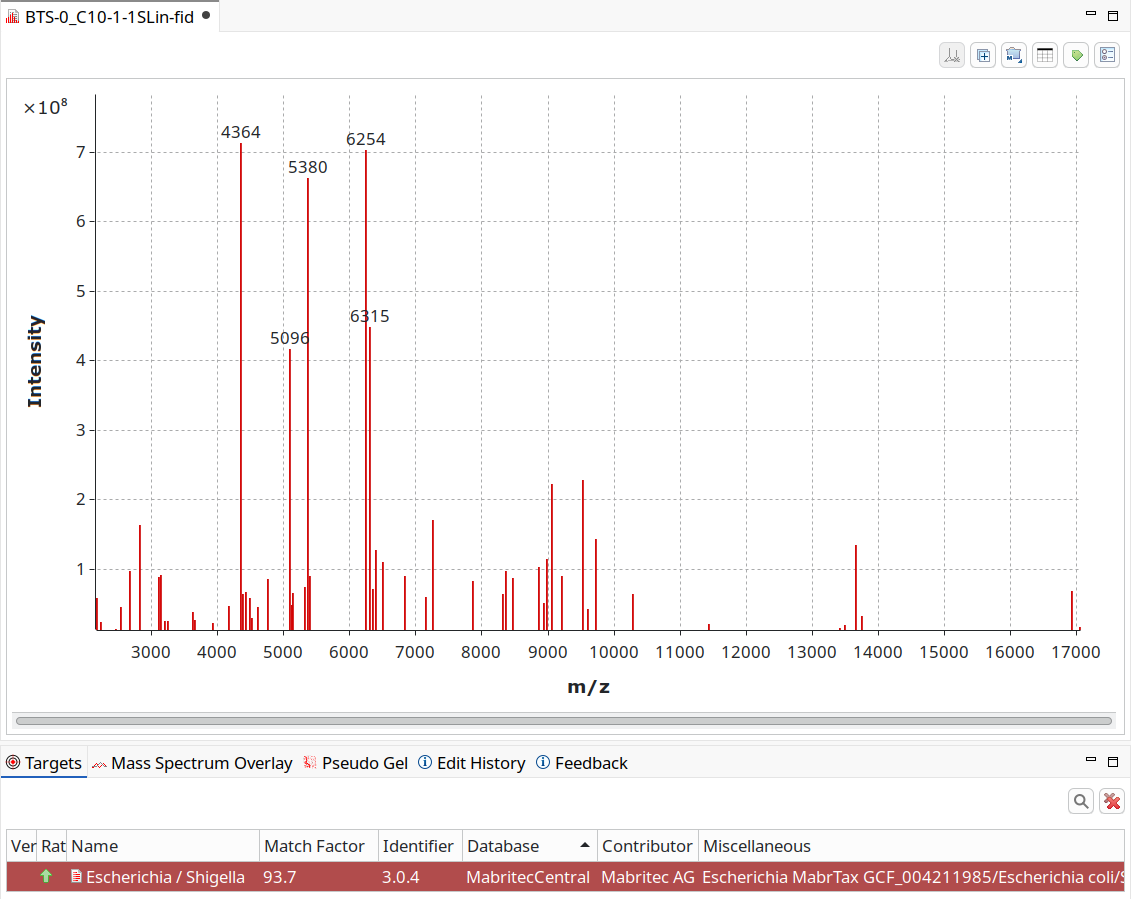
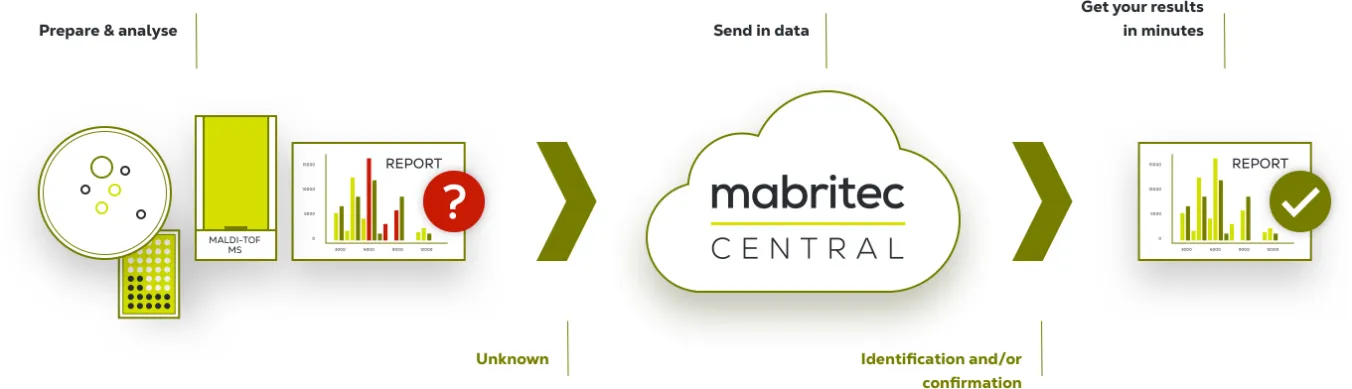
MALDI-TOF MS is a popular identification technique in clinical microbiology labs. Mabritec offers an interesting web service to identify against a large self-assembled and quality controlled in-silico spectra database.
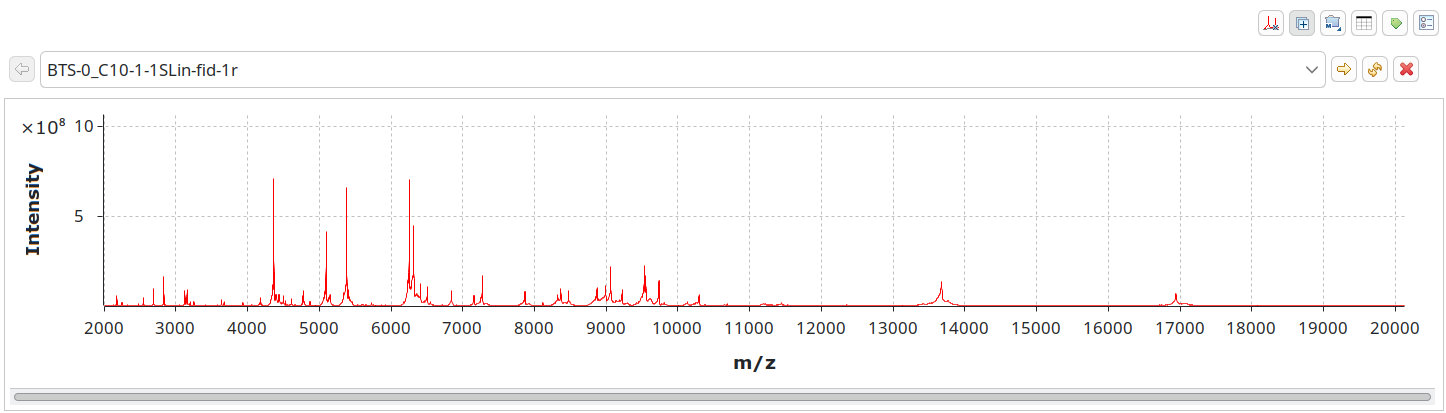
We first start off with a spectrum acquired from a Bruker microflex axial TOF device. OpenChrom loads both the unprocessed and the processed one (notice the -1r suffix). I take the Bruker-processed one, but you can also apply your own. See our take on Baseline Correction for example.
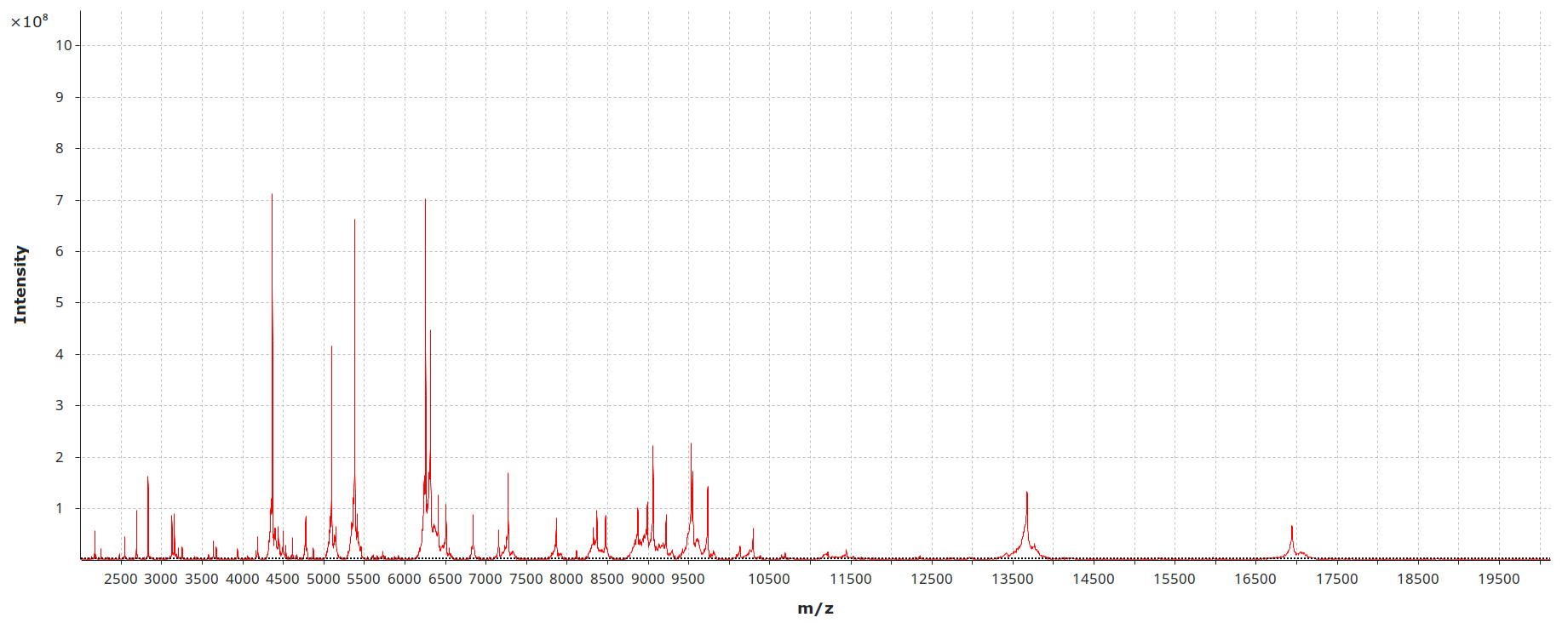
However, the noise (for signal to noise) needs to be estimated first. You can choose between a median noise, which is just a straight line across the whole spectrum.
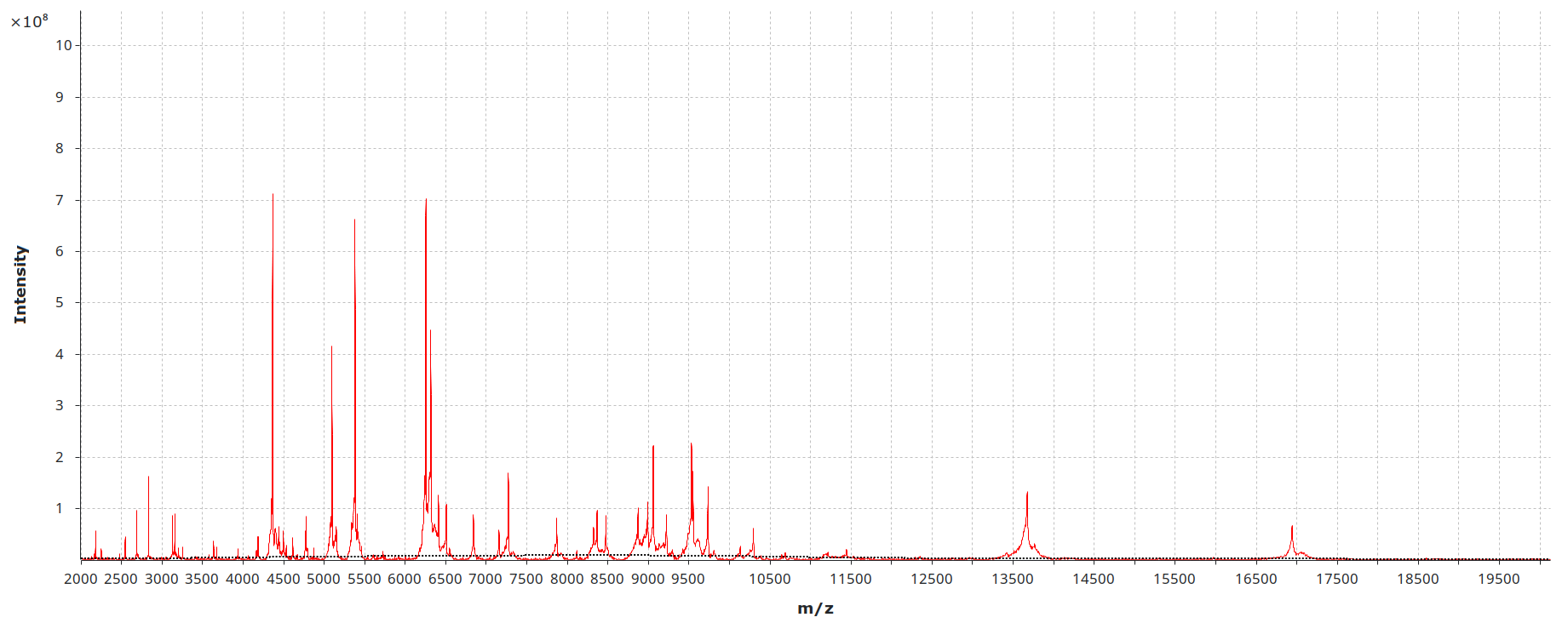
Or use a local regression algorithm: LOESS (also Lowess), which gives a smoothed line that takes a bit longer to calculate but gives a better fit as spectra noise might be uneven.
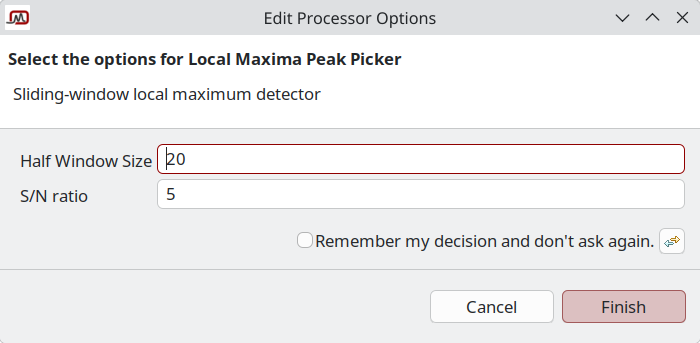
Next step is peak picking. We choose the relevant masses automatically using the estimated noise. Increasing the S/N ratio gives you fewer peaks.
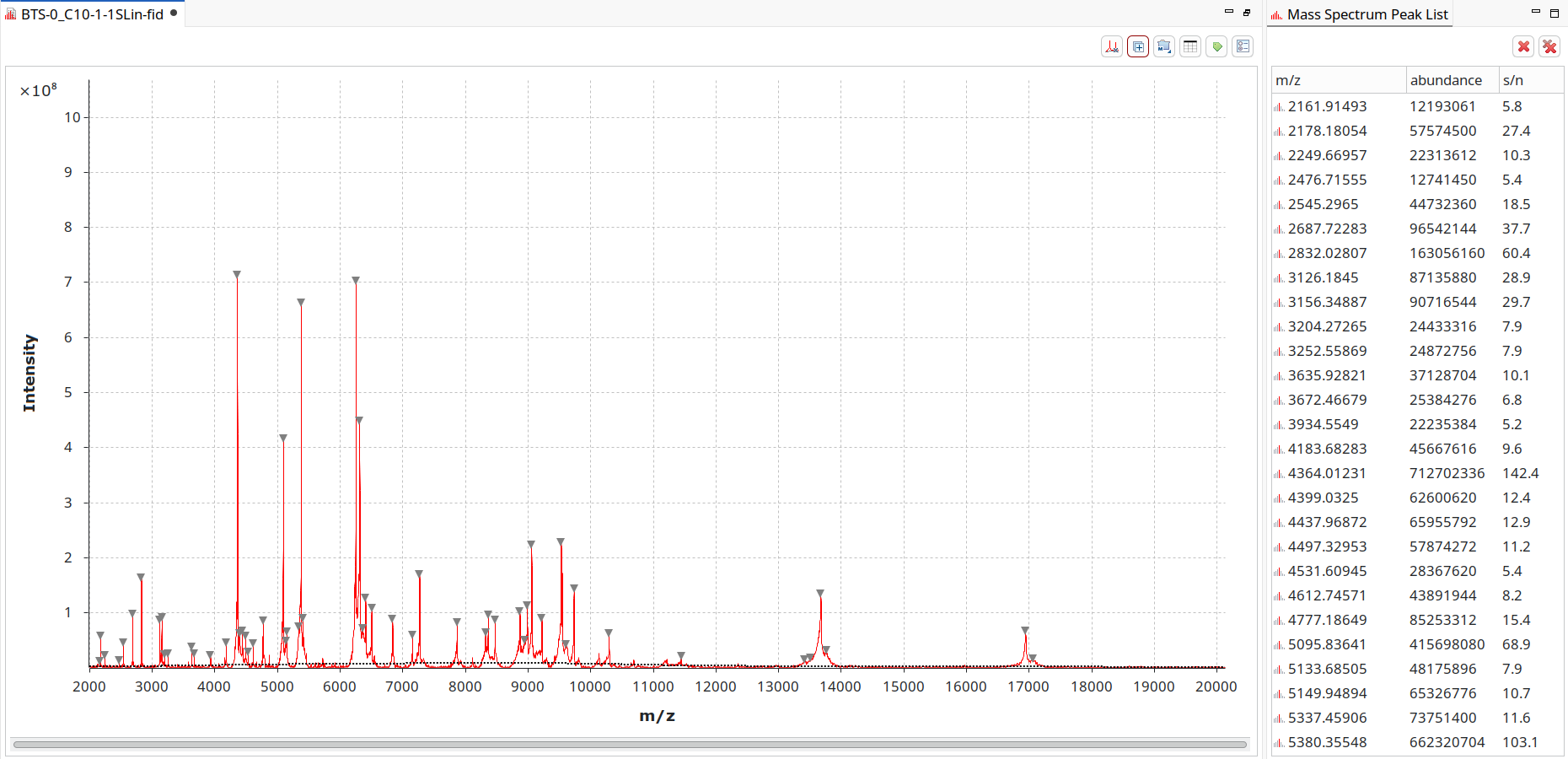
Peaks are marked with gray arrows similar to chromatography peaks in OpenChrom. On the right, a peak list appears with signal-to-noise ratio per peak. If you are not satisfied with the result, you can delete individual peaks with the red ❌ or all of them with the ❌❌ button.
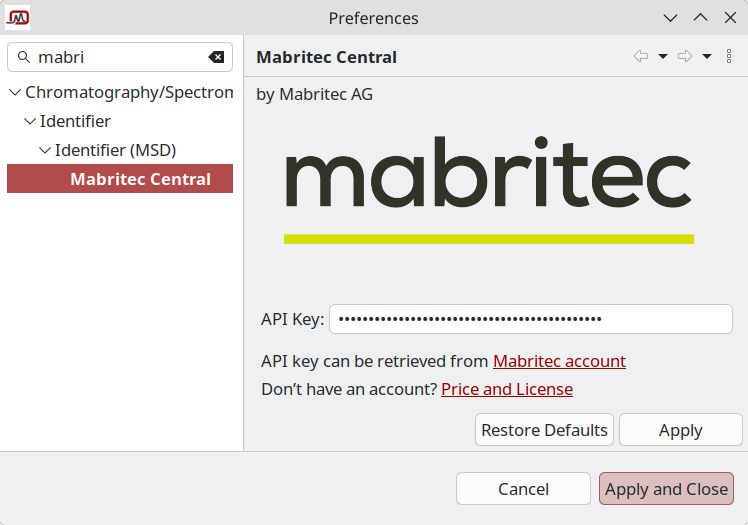
For mabritec - gesellschaft für massenbasierte rasche identifikationstechnologien (German for quick mass-based identification technologies company) you need a valid license, which you can buy from Mabritec Central. OpenChrom requires your API key, which is displayed in your Mabritec account.
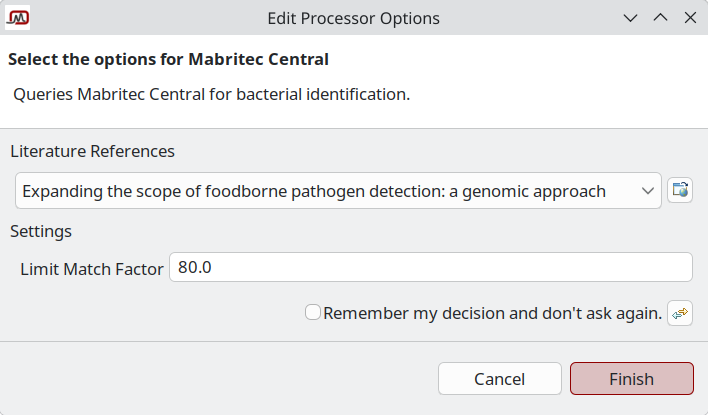
With that in place, now the fun part begins. Identification is basically parameterless. The Limit Match Factor setting is inherited from OpenChrom and useful for chaining up identification to avoid runs of already identified samples.
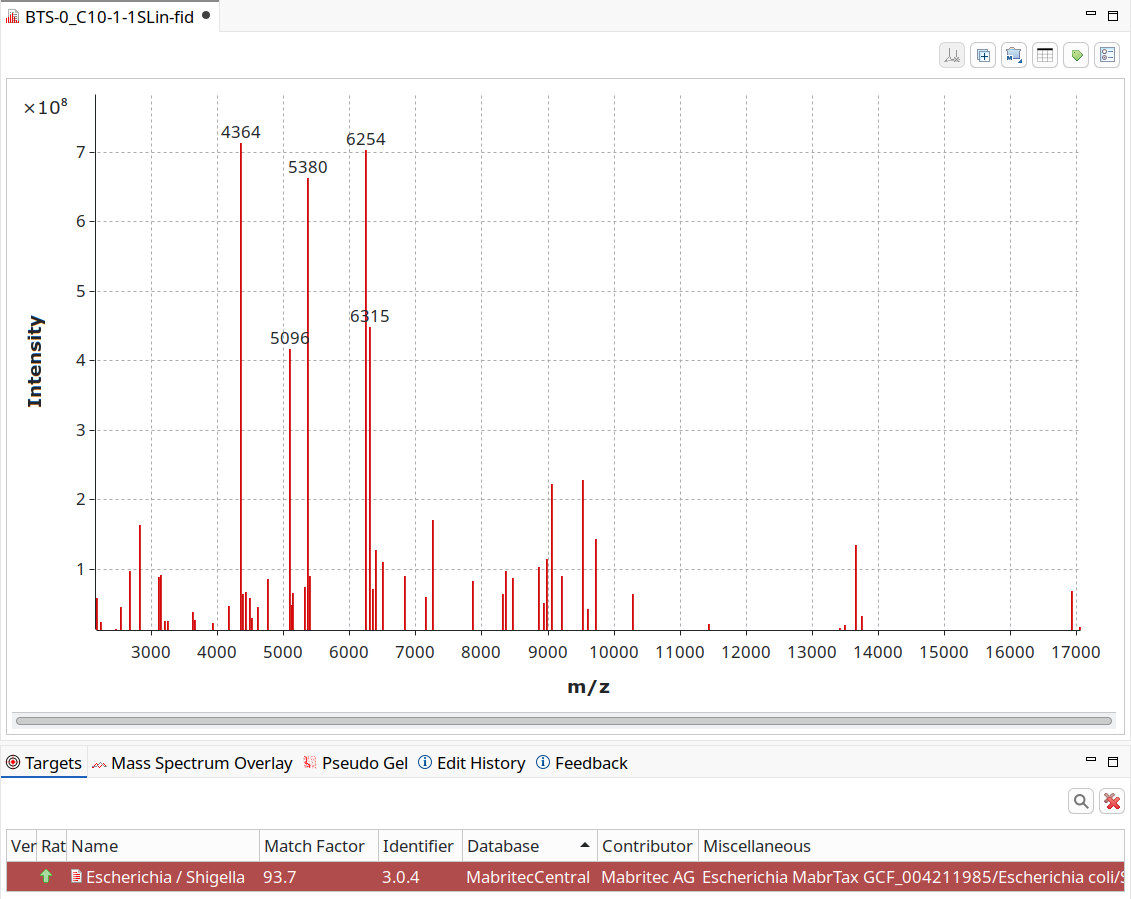
The identification is displayed in the 🎯 Targets view. Mabritec Central uses a single percentage match score and a single one-line result that already contains the interpretation. For example, in here, my E. coli can't be easily distinguished from Shigella, which is taxonomically E. coli just with its STEC toxin vector. A PCR-based test could distinguish that.