Baseline Correction
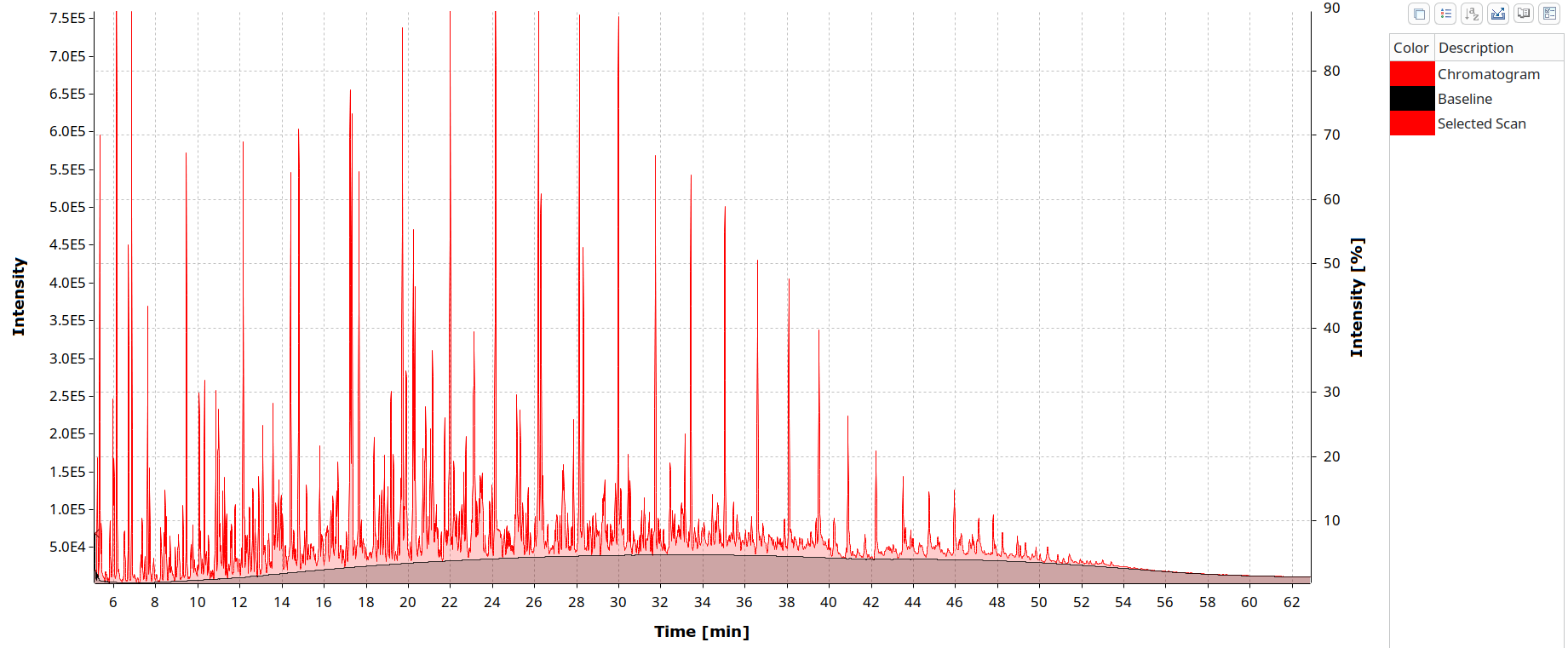
We offer a unified workflow for baseline correction from chromatography to mass spectrometry.
Chromatography
In the OpenChrom Data Analysis perspective, you can right-click into the chromatogram and choose Baseline Detectors. At the time of writing it supports
- Lowest Intensity
- Lower Convex Hull
- SNIP
- TopHat
with the Delete option to remove the baseline again. All the operations don't change the chromatogram yet. A black line in the chromatogram shows the estimated baseline.
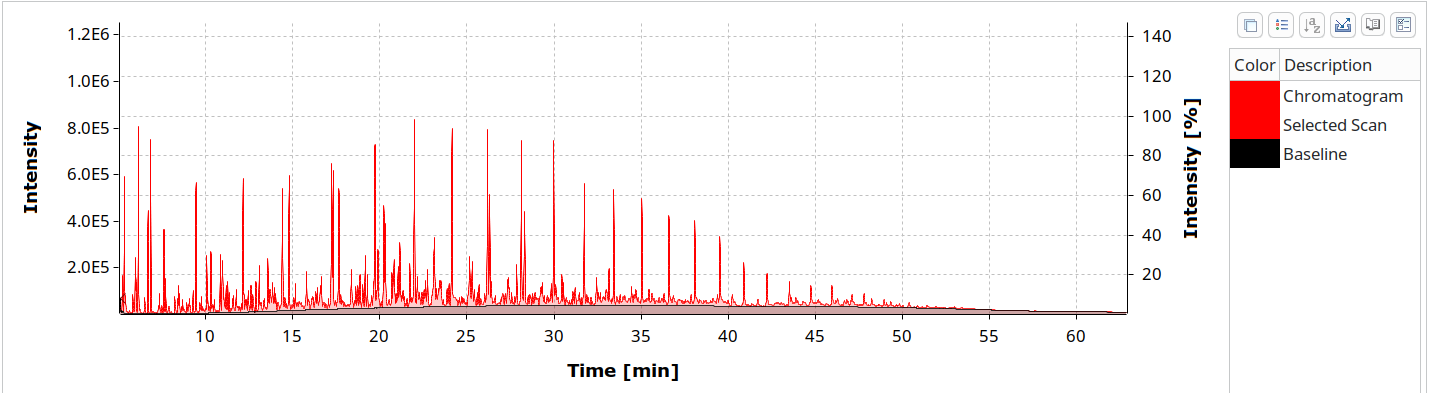
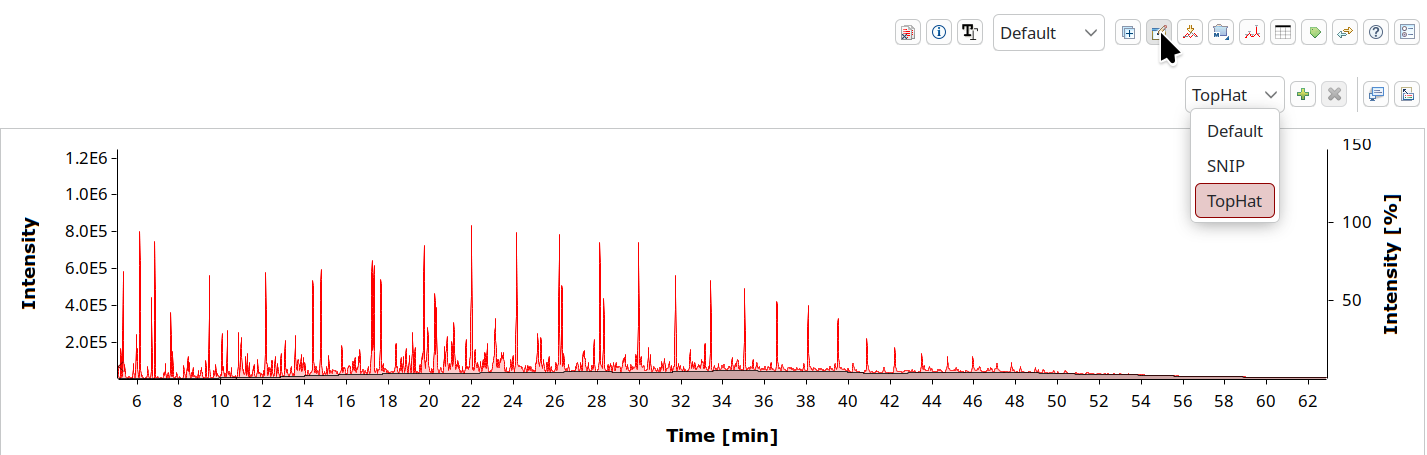
To compare multiple algorithms with different parameters, you can click the edit toolbar and add new baselines with the green cross icon. Run the baselines with the same right-click menu and switch between them to compare results.
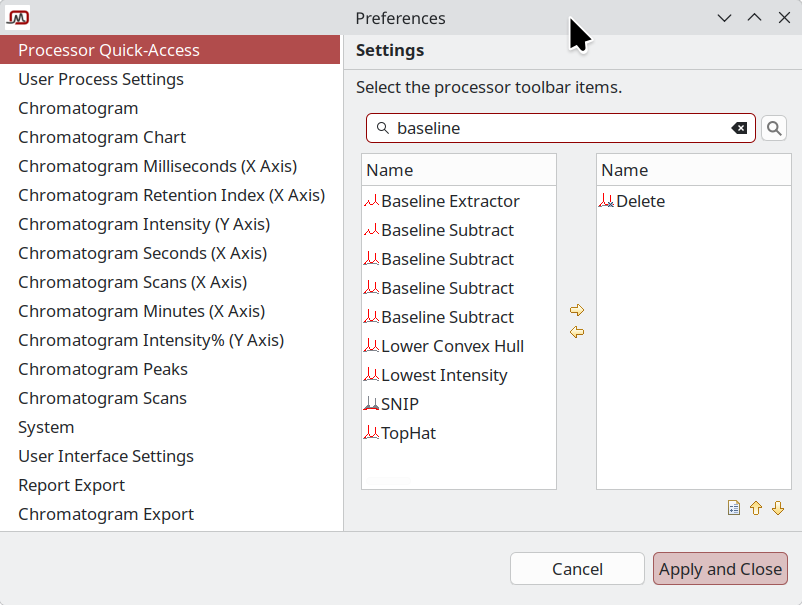
You can also add the Baseline Deletion button to the chromatogram editor toolbar in Preferences: Processor Quick Access to iterate faster.
Once you are satisfied, you can choose the Chromatogram Filter: Baseline Subtract to remove the baseline.
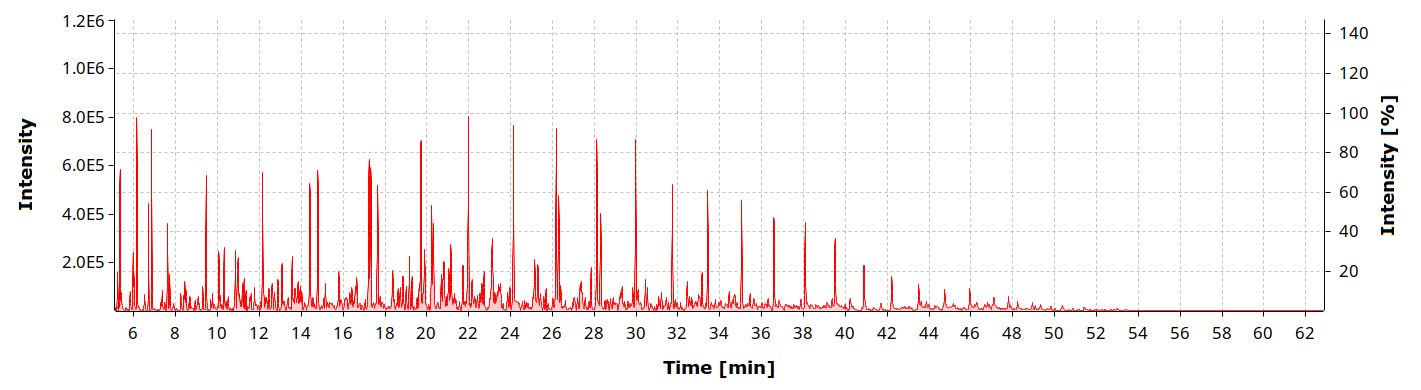
The inverted operation Chromatogram Filter: Baseline Extract is also supported for experimental techniques where the peaks need to be shaved of a hump that is actually to be analyzed, for example, MOSH/MOAH analysis.
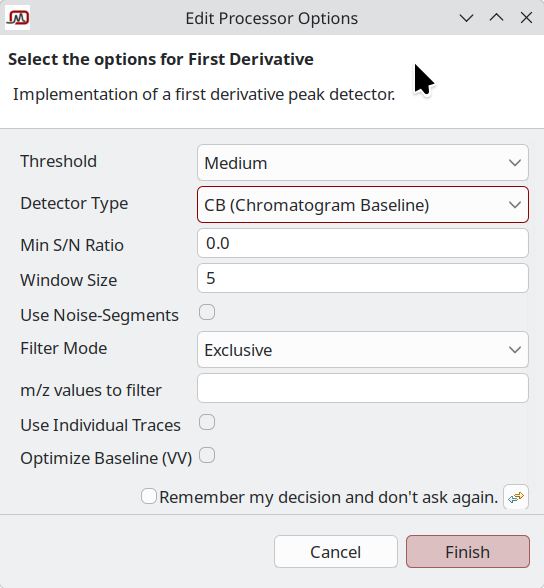
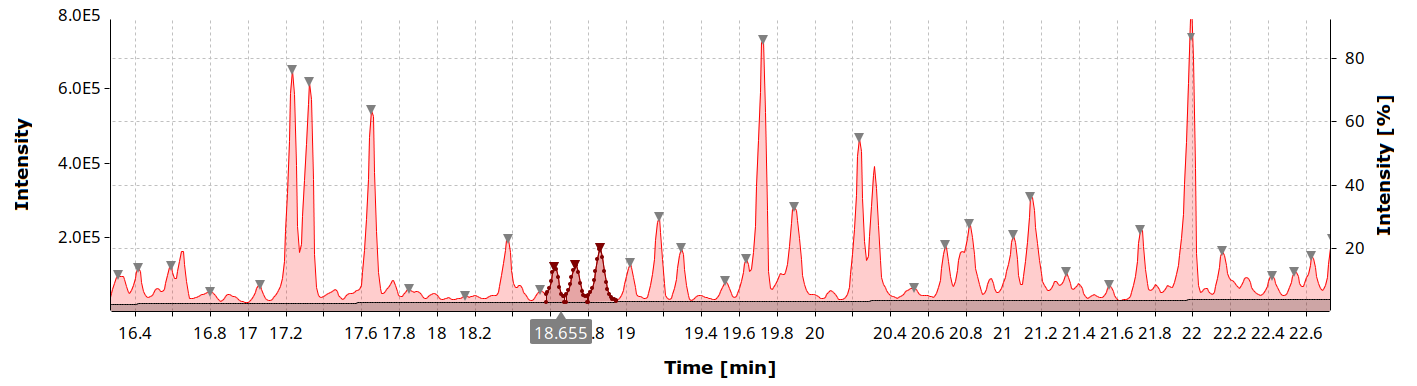
It is also possible to not subtract the baseline at all but still use the information from the baseline detector for peak detection. In the Peak Detector: First Derivative choose CB (Chromatogram Baseline), which will align your peaks onto it.
MALDI-TOF MS
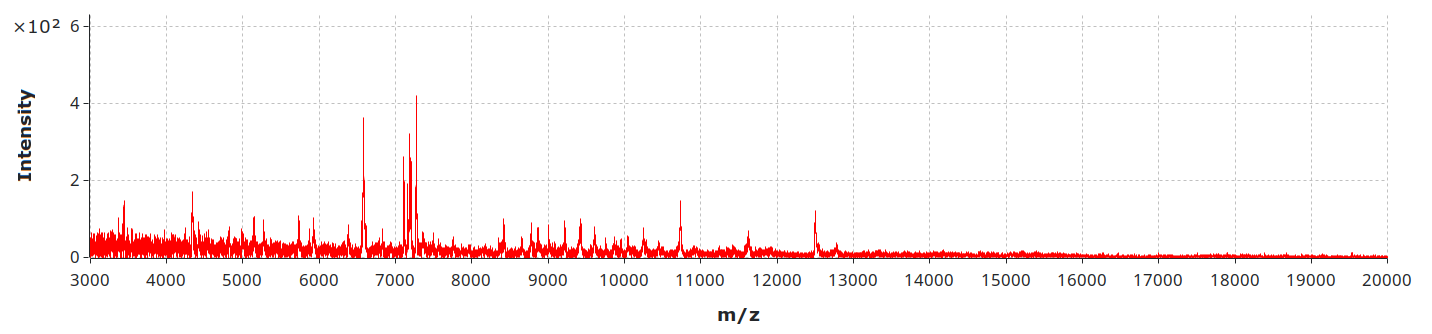
Matrix-Assisted Laser Desorption/Ionization Time-Of-Flight Mass Spectrometry skips the chromatography part altogether, but it is recorded in profile mode, which can be pretty noisy. Switch to the MALDI-TOF MS perspective and pick your file.
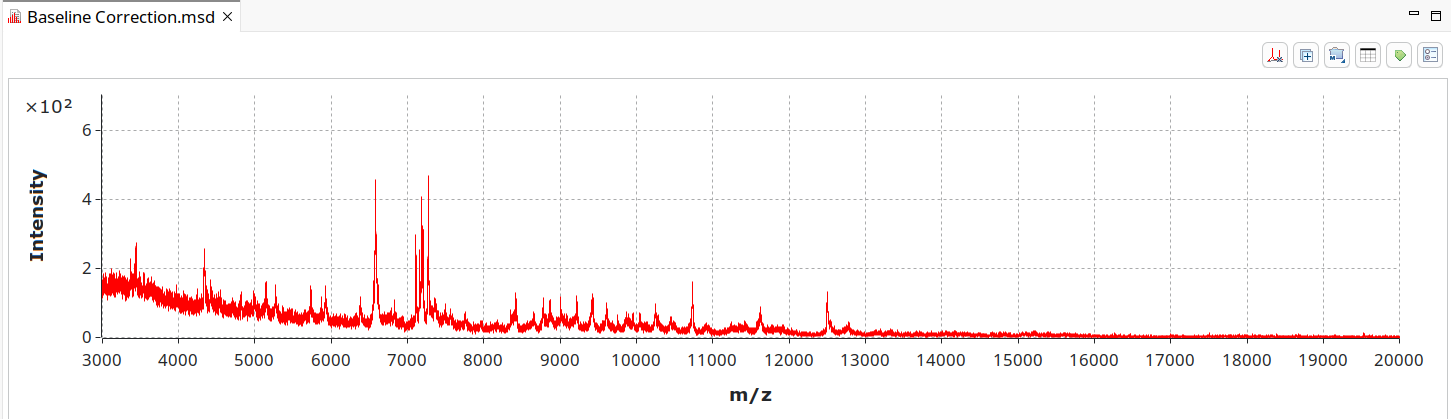
The concept is similar. The baseline deletion button has already been added to the toolbar for you. Same workflow: right-click into the mass spectrum and choose Baseline Detector.
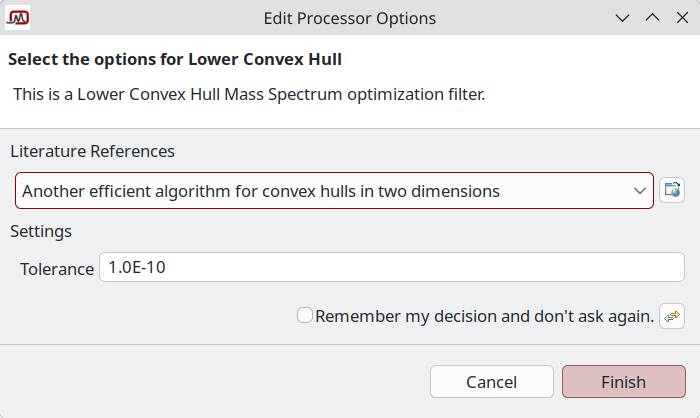
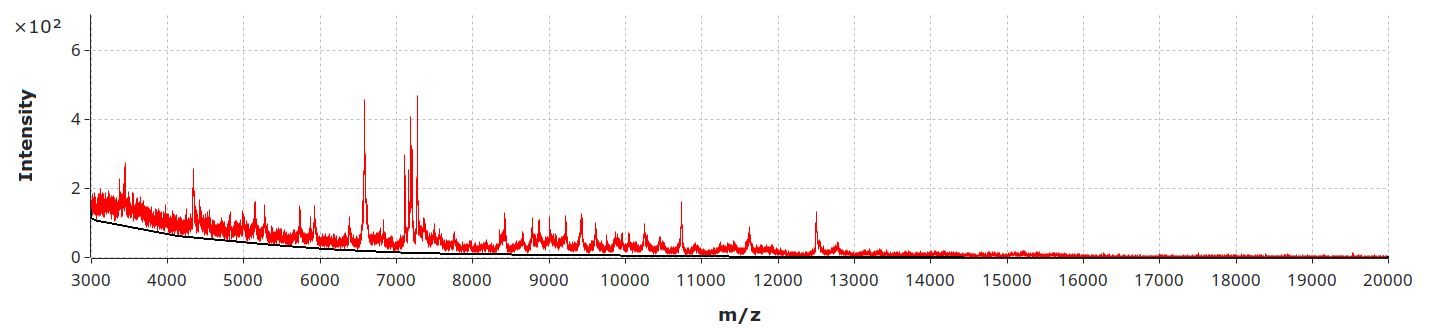
The baseline removal by computing the convex hull of the spectrum via monotonic regression can be a good strategy. It features a parameter that acts mostly as a constant and may remain untouched as it is basically parameterless.
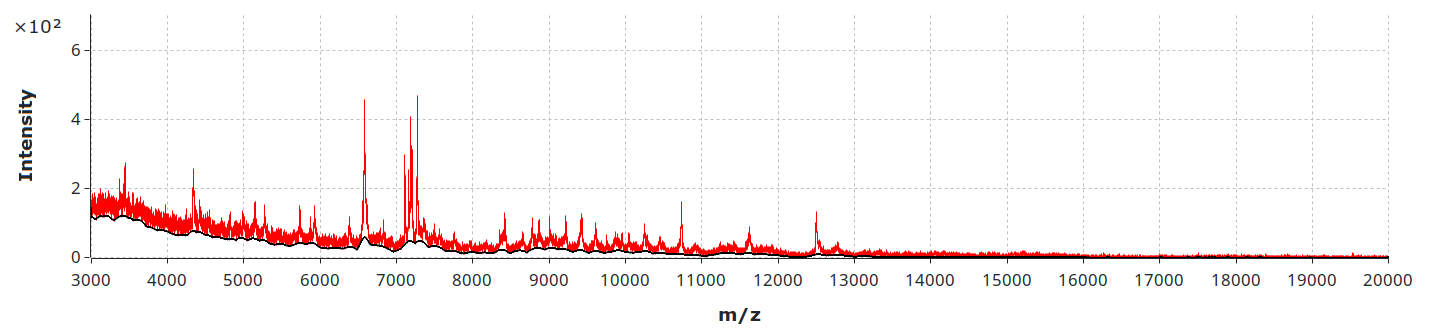
Statistics-sensitive Non-linear Iterative Peak-clipping (SNIP) was never designed for chromatography or mass spectrometry in the first place. However, it can produce good results.
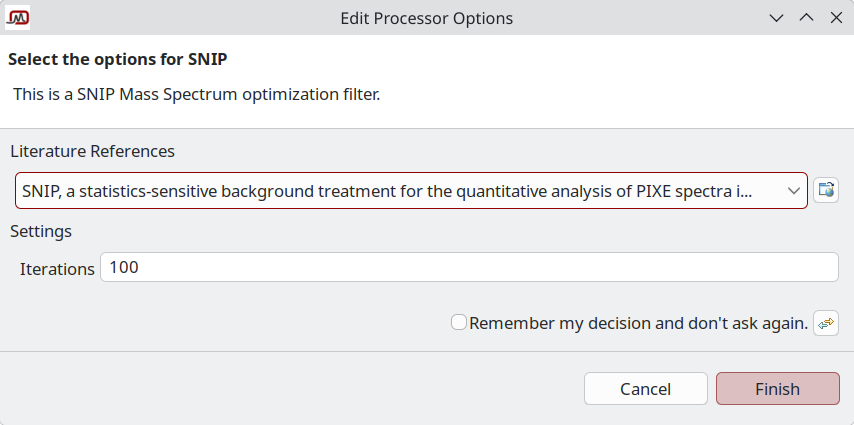
The only parameter is how many times the algorithm is applied, which gives a more detailed shape the larger the value.
OpenChrom implements a TopHat algorithm that can be parameter-less. Just leave the half window size empty or 0, and an optimal value will be computed. It can also be set to a fixed value for better reproducibility in a batch.
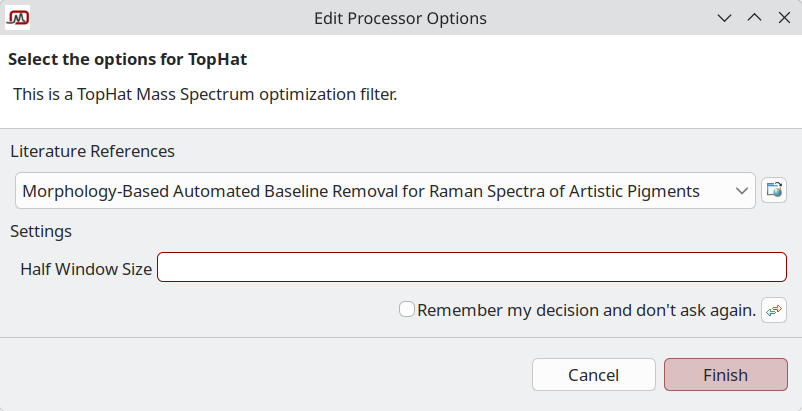
Again, this was not designed for MALDI-TOF MS in particular, but it yields good results. A similar algorithm can be found in commercial vendor software.
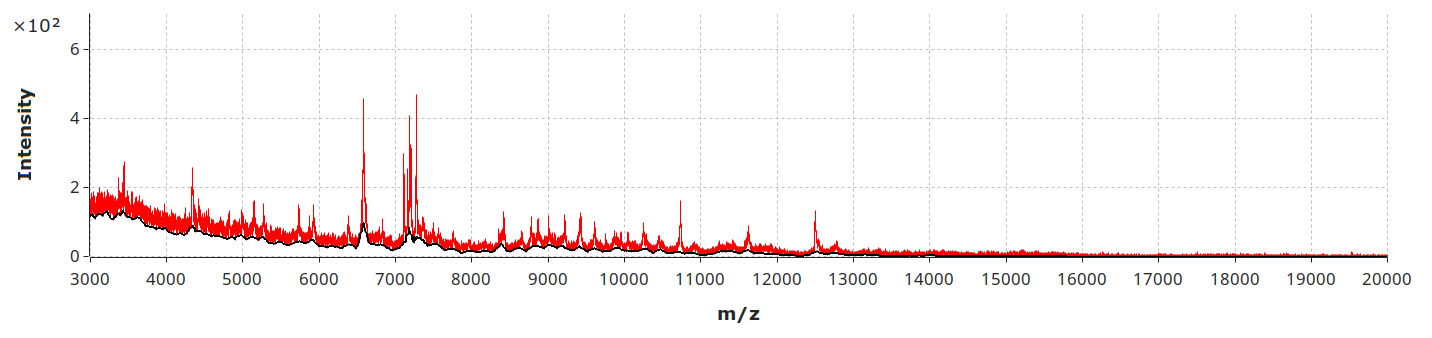
Use Mass Spectrum Filter: Baseline Subtract to remove your baseline.